Monday, 29 December 2025
Fatty alcohols of palm oil based vs petrochemical
Speciality Fats and Fatty Alkohol from Palm Oil
Sunday, 28 December 2025
Glycerin from Palm Oil Industry
Clear, industry-grade explanation of GLYCERIN (GLYCEROL) from the palm oil industry—covering where it comes from, how it’s produced, and what the world uses it for.
๐งด Glycerin from Palm Oil Industry
Process • Grades • Final Products

1️⃣ What is Glycerin?
Glycerin (glycerol) is a colorless, odorless, sweet, hygroscopic liquid alcohol.
Why it matters:
Safe (food & pharma grades)
Water-soluble
Excellent humectant (retains moisture)
Biodegradable & renewable when palm-based
๐ Palm oil is the largest renewable source of glycerin globally.
2️⃣ Where Glycerin Comes From (Palm Value Chain)
Glycerin is not the main product—it is a by-product from two major processes:
A. Fat Splitting (Hydrolysis) – Oleochemical Route
Palm / PK Oil + Water → Fatty Acids + Glycerin
B. Transesterification – Biodiesel Route
Palm Oil + Methanol → Methyl Ester (Biodiesel) + Glycerin
๐ About 10% by weight of oil becomes glycerin.
3️⃣ Glycerin Process Flow (Step-by-Step)
๐ High-Level Flow
Palm Oil / PKO / PFAD
↓
Fat Splitting or Transesterification
↓
Sweet Water (10–20% glycerin)
↓
Evaporation & Distillation
↓
Crude Glycerin
↓
Refining & Polishing
↓
Final Glycerin Grades
4️⃣ Detailed Process Explanation
① Fat Splitting / Biodiesel Reaction
High pressure & temperature (fat splitting)
Catalyst & methanol (biodiesel)
Output:
Fatty acids / methyl ester (main product)
Sweet water containing glycerin
② Sweet Water Concentration
Glycerin content: 10–20%
Multi-effect evaporators remove water
Produces crude glycerin (80–88%)
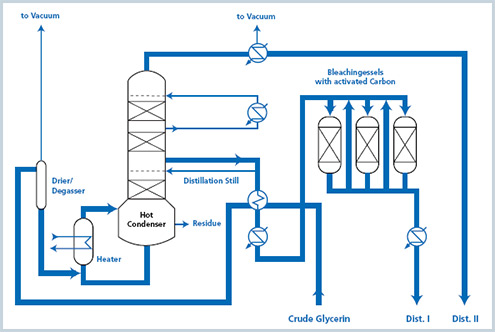
③ Glycerin Distillation
Vacuum distillation
Removes:
Salts
Methanol
Color bodies
Odor compounds
④ Polishing & Refining
Depending on grade:
Ion exchange
Carbon treatment
Fine filtration
5️⃣ Glycerin Grades from Palm Oil
| Grade | Purity | Main Uses |
|---|---|---|
| Crude glycerin | 80–88% | Industrial, energy |
| Technical grade | 95–98% | Chemicals, resins |
| USP / Pharma grade | ≥99.5% | Medicine, cosmetics |
| Food grade | ≥99.5% | Food & beverage |
๐ Higher purity = much higher value
6️⃣ Mass Balance (Rule of Thumb)
From 1,000 kg palm oil:
Fatty acids / biodiesel: ~900 kg
Glycerin: ~100 kg
After refining:
~85–90 kg refined glycerin
7️⃣ Final Products Made from Palm-Based Glycerin
๐งผ Personal Care (Largest Market)
Soap
Shampoo
Toothpaste
Body lotion
Cosmetics
Function: Moisturizer, texture, stability
๐ฌ Food & Beverage
Sweetener
Humectant (keeps food soft)
Food coating
Found in:
Bakery
Candy
Processed food
๐ Pharmaceutical & Medical
Syrups
Capsules
Cough medicine
Creams & ointments
๐ Must be USP / EP grade
๐งช Industrial & Chemical
Resins
Polyols
Antifreeze
Lubricants
Alkyd paints
๐ Energy & Specialty
Fuel additives
Biogas substrate
Explosives (nitroglycerin)
E-liquid / vape
8️⃣ Why Palm-Based Glycerin Dominates
Compared to synthetic glycerin:
| Palm-Based | Synthetic |
|---|---|
| Renewable | Petrochemical |
| Lower carbon footprint | Higher emissions |
| Food & pharma safe | Limited use |
| Global scale | Niche |
๐ Engineer’s Insight
Glycerin was once waste
Today it is a strategic co-product
Profitability depends on:
Purification level
Market access
Integration with oleochemical plants
๐ง Final Takeaway
Palm oil doesn’t just feed the world—it hydrates it, heals it, and cleans it through glycerin.
From cooking oil → chemistry → medicine → daily life
Here’s a clear, data-backed overview of global glycerin demand by industry — showing which sectors consume glycerin and why it matters for the palm oil and oleochemical value chain:
๐ Global Glycerin Demand by Industry
Glycerin (glycerol) is a versatile chemical produced mainly as a co-product from:
biodiesel production
oleochemical splitting of fats/oils
Palm-based glycerin is a major part of the global supply because palm oil and palm kernel oil are widely processed worldwide.
Below are the key demand segments and their relative importance:
1️⃣ Personal Care & Cosmetics
๐ง Largest single global segment (~30–40%+)
Used as a humectant, emollient, moisturizer, and solvent
Found in lotions, creams, shampoos, soaps, toothpaste, deodorants, etc.
Rising demand tied to natural and plant-based formulations.
๐ This segment typically accounts for ≈30–42% of global glycerin use.
2️⃣ Pharmaceuticals & Healthcare
๐ Major growing segment (~20–25%)
Used as solvent, sweetener, excipient, and stabilizer
Common in cough syrups, capsules, ointments, wound care products
Pharmaceutical grade glycerin demand is increasing with stricter purity requirements.
๐ Around 20–25% of glycerin goes into medical and healthcare uses.
3️⃣ Food & Beverages
๐ญ Significant demand (~15–30%)
Functions as a humectant, sweetener, and texture enhancer
Used in bakery goods, confectionery, beverages, low-sugar products
Recognized as safe by regulators such as the FDA.
๐ Shares vary by report source but often fall in the 15–30% range.
4️⃣ Industrial & Chemical Applications
๐ญ Important segment (~10–15%)
Feedstock for derivatives such as propylene glycol, epichlorohydrin, solvents, resins
Used in adhesives, antifreeze, plastics, coatings, and rubber.
๐ Industrial uses typically represent ≈10–15% of total glycerin consumption.
5️⃣ Biodiesel / Biofuels (Indirect demand)
⚡ Driven by production, not direct use
Glycerin itself is a by-product of biodiesel (FAME) manufacture
Biodiesel output contributes significantly to glycerin supply (≈60% from biodiesel pathways) — this boosts supply rather than direct end-use demand.
๐ While this isn’t a direct demand sector, it fundamentally shapes global glycerin availability and pricing.
๐ Approximate Breakdown (Typical Range)
Here’s a consolidated, approximate view of how glycerin demand is distributed globally:
| Sector | Typical % of Total Glycerin Demand |
|---|---|
| Personal Care & Cosmetics | ~30–40% |
| Pharmaceuticals & Healthcare | ~20–25% |
| Food & Beverages | ~15–30% |
| Industrial & Chemical | ~10–15% |
| Other (emerging uses) | ~5% |
Note: Actual market share can vary by region and reporting source, but most credible market analyses align with this broad distribution.
๐ Emerging & Niche Applications
In addition to the major sectors above, glycerin demand is also rising in:
Bio-based polymers and biodegradable plastics
Tobacco humectants
Specialty chemicals for coatings, textiles, and lubricants
Animal nutrition and feed additives
Green solvents and chemical intermediates
These niche uses are smaller by volume but significant for innovation and value creation.
๐ง Key Trends Driving Demand
✔ Rising global population and middle-class consumption
✔ Growth in personal care and cosmetic markets
✔ Increasing pharmaceutical production and aging populations
✔ Health and wellness trends boosting food and beverage use
✔ Shift to renewable and bio-based chemicals
✔ Expansion of biodiesel production increasing glycerin supply and availability
๐ Final Insight
Glycerin has evolved from a by-product to a high-value industrial chemical with broad global demand across food, health, personal care, and industrial applications. Its versatility and safety make it indispensable across sectors.
10,000 consumer products globally from palm oil industry
But from an industry + value-chain perspective, we can answer this clearly and defensibly.
๐ด How Many TOTAL Products Come from the Palm Oil Industry?
✅ Short answer
Over 200 direct products, and thousands of final consumer products worldwide.
Let me break this down step by step, from source → chemistry → what people actually use.
๐ The Palm Oil Value Chain (Big Picture)

1️⃣ PRIMARY PRODUCTS (Palm Oil Mill)
~10 products
From Fresh Fruit Bunch (FFB):
| Category | Products |
|---|---|
| Oils | Crude Palm Oil (CPO), Crude Palm Kernel Oil (CPKO) |
| Biomass | EFB, Fibre, Shell |
| Energy | Biogas (from POME) |
| By-products | Palm kernel cake, ash |
๐ ~10 products
2️⃣ REFINERY PRODUCTS
~20–25 products
From refining & fractionation:
| Category | Examples |
|---|---|
| Food oils | RBD Palm Oil, Palm Olein, Palm Stearin |
| Kernel oils | RBD PKO, PK Olein, PK Stearin |
| By-products | PFAD |
| Specialty fats | Bakery fats, confectionery fats |
๐ ~20–25 products
3️⃣ BASIC OLEOCHEMICAL PRODUCTS
~30–40 products
These are chemical building blocks:
| Group | Examples |
|---|---|
| Fatty acids | Lauric, Myristic, Palmitic, Stearic, Oleic |
| Fatty alcohols | Lauryl, Cetyl, Stearyl |
| Esters | Methyl ester, glycerides |
| Glycerin | Crude, refined, pharma grade |
๐ ~30–40 products
4️⃣ DERIVATIVE & SPECIALTY OLEOCHEMICALS
~80–120 products
Converted further into:
Surfactants
Emulsifiers
Plastic additives
Lubricants
Wax esters
Amides
Quaternary ammonium compounds
๐ ~80–120 products
(this number grows every year)
5️⃣ BIOMASS & ENERGY PRODUCTS
~10–15 products
From waste & residues:
Electricity
Steam
Biogas
Biodiesel
Biochar
Pellet fuel
Organic fertilizer
๐ ~10–15 products
๐ข TOTAL DIRECT INDUSTRIAL PRODUCTS
| Stage | Approx. Count |
|---|---|
| Palm oil mill | ~10 |
| Refinery | ~25 |
| Oleochemical (basic) | ~40 |
| Oleochemical (specialty) | ~100 |
| Biomass & energy | ~15 |
| TOTAL | ~190–220 products |
✅ Industry-safe statement:
“The palm oil industry produces over 200 direct industrial products.”
๐ FINAL CONSUMER PRODUCTS (What Humans Actually Use)
Each oleochemical becomes dozens or hundreds of branded products.
Examples:
One fatty alcohol → 50+ shampoo brands
One surfactant → 100+ detergent formulations
One specialty fat → dozens of chocolate products
๐ This easily exceeds 5,000–10,000 consumer products globally.
๐ง Why Palm Oil Has So Many Products
Palm oil is unique because it:
Has multiple carbon chains
Can be split, hydrogenated, esterified
Is food-safe + chemical-grade
Replaces petrochemicals
That’s why no other vegetable oil matches its product diversity.
๐ Engineer’s & Industry Insight
Upstream (mill) → volume
Refinery → stability
Oleochemical → value
Specialty chemicals → profit & control
Countries that stop at CPO export only see a fraction of the value.
✅ Final Answer (One Line)
The palm oil industry produces over 200 direct industrial products and supports thousands of consumer products used daily around the world.
Palm Oil Refinery & Oleochemical Industry, products
ALL products from palm oil refinery and oleochemical industry, written from industry → market → end-user perspective.
This is how palm oil reaches the world ๐
๐ด FROM PALM OIL MILL → REFINERY → OLEOCHEMICAL → GLOBAL PRODUCTS


PART 1️⃣ : PALM OIL REFINERY PRODUCTS
(Food, energy & industrial oils)
๐น Input
CPO (Crude Palm Oil)
CPKO (Crude Palm Kernel Oil)
Refinery removes:
FFA
Odour
Colour
Impurities
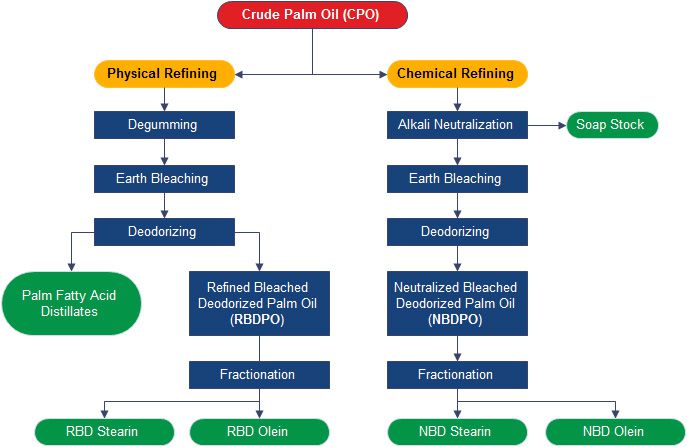
๐ข️ MAIN REFINERY PRODUCTS
1️⃣ RBD Palm Oil
(Refined, Bleached, Deodorized)
Uses worldwide:
Cooking oil
Frying oil (restaurants, fast food)
Food manufacturing
๐ Major markets:
Asia, Africa, Middle East
2️⃣ Palm Olein (Liquid Fraction)
Low melting point → stays liquid
Used for:
Bottled cooking oil
Instant noodles
Snack food
Frying oil
๐ Most exported palm oil product
3️⃣ Palm Stearin (Solid Fraction)
High melting point
Used for:
Margarine
Shortening
Bakery fats
Cocoa butter substitute (CBS)
๐ Backbone of bakery & confectionery industry
4️⃣ Palm Fatty Acid Distillate (PFAD)
By-product of deodorization
Used for:
Soap
Biodiesel
Animal feed
Oleochemical feedstock
๐ฐ Very valuable by-product
5️⃣ RBD Palm Kernel Oil (RBD PKO)
More lauric → behaves like coconut oil
Used for:
Ice cream
Chocolate coating
Soap & detergent
Oleochemicals
6️⃣ Palm Kernel Stearin & Olein
Fractionated PKO
Used for:
Specialty fats
Infant formula
Cosmetic creams
PART 2️⃣ : OLEOCHEMICAL PRODUCTS
(Non-food, chemical industry)
Oleochemicals are bio-based chemicals made from:
Palm oil
Palm kernel oil
PFAD
They replace petrochemicals.
⚗️ CORE OLEOCHEMICAL BUILDING BLOCKS


1️⃣ Fatty Acids
(C12–C18 chain)
Used in:
Soap
Detergent
Rubber
Paint
Lubricants
๐ Exported globally as industrial raw material
2️⃣ Fatty Alcohols
Critical ingredient
Used in:
Shampoo
Detergent
Toothpaste
Cosmetics
Pharmaceutical emulsifiers
๐ One of the highest value palm derivatives
3️⃣ Glycerin (Glycerol)
Sweet, colourless liquid
Used in:
Food (sweetener, humectant)
Medicine
Toothpaste
Vape liquids
Explosives (nitroglycerin)
๐ Huge global demand
4️⃣ Methyl Ester (Biodiesel Feedstock)
From transesterification
Used for:
Biodiesel (B10, B20, B30)
Solvents
Chemical intermediates
PART 3️⃣ : CONSUMER PRODUCTS (What the World Sees)
๐งผ Personal Care
Soap
Shampoo
Body wash
Toothpaste
Cosmetics
๐ Almost every bathroom uses palm derivatives
๐ซ Food Industry
Chocolate
Biscuits
Bread
Margarine
Instant noodles
๐ Palm oil provides texture & shelf life
๐งฝ Home & Industrial
Detergent
Lubricants
Candle wax
Plastic additives
Ink & paint
๐ Energy & Transport
Biodiesel
Bio-lubricants
Hydraulic oil
PART 4️⃣ : PHARMACEUTICAL & SPECIALTY CHEMICALS
Drug capsules
Emulsifiers
Vitamin carriers
Medical creams
Palm-based chemicals are clean, stable, biodegradable
๐ GLOBAL TRADE SNAPSHOT
Major palm oil exporters:
๐ฎ๐ฉ Indonesia
๐ฒ๐พ Malaysia
Major consumers:
๐จ๐ณ China
๐ฎ๐ณ India
๐ช๐บ Europe
๐บ๐ธ USA
๐ฏ๐ต Japan
๐ VALUE CHAIN SUMMARY (Simple)
Palm Fruit
↓
Palm Oil Mill
↓
CPO / PKO
↓
Refinery
↓
Food Oils + PFAD
↓
Oleochemical Plant
↓
Chemicals
↓
Daily Products Used Worldwide
๐ Engineer’s Insight (Important)
The real money is not in CPO
The real power is downstream
Countries that master:
Refining
Oleochemicals
Specialty chemicals
๐ Control global supply chains
๐ง Final Thought
Palm oil is not just cooking oil.
It is:
Food
Energy
Chemistry
Daily life
Every human on earth uses palm-based products—often without knowing it.
If you want next, I can explain:
๐ Country-by-country palm product usage
๐ญ Refinery vs oleochemical profit comparison
⚙️ Process flow of oleochemical plant
๐ Simple version for students / LinkedIn post
Just tell me ๐End-to-end PROCESS FLOW of an OLEOCHEMICAL PLANT, explained from raw material → chemical building blocks → downstream products, exactly how it works in real industrial plants.
I’ll keep it structured, engineer-friendly, and global-standard.
๐งช OLEOCHEMICAL PLANT – PROCESS FLOW OVERVIEW


๐ด 1️⃣ FEEDSTOCK (FROM PALM INDUSTRY)
Oleochemical plants mainly use:
RBD Palm Oil
RBD Palm Kernel Oil (PKO)
Palm Fatty Acid Distillate (PFAD)
Why palm?
Stable supply
Suitable carbon chain (C12–C18)
Renewable & biodegradable
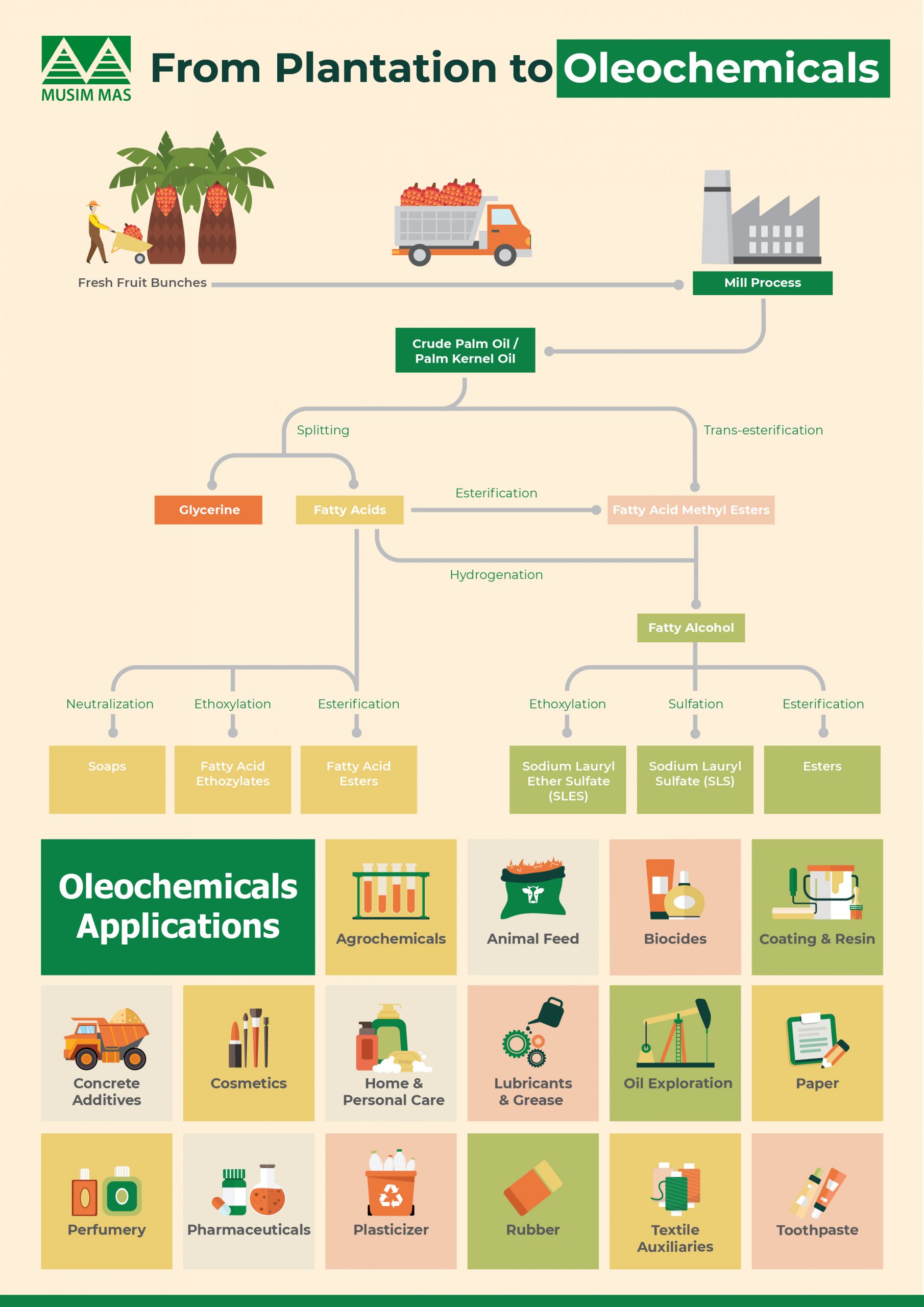
⚙️ 2️⃣ MAIN OLEOCHEMICAL PROCESS FLOW
๐ HIGH-LEVEL FLOW
Palm / PK Oil / PFAD
↓
Fat Splitting / Transesterification
↓
Fatty Acids + Glycerin
↓
┌───────────────┬────────────────┐
↓ ↓ ↓
Fatty Acids Fatty Alcohols Methyl Ester
↓ ↓ ↓
Distillation Hydrogenation Biodiesel /
↓ ↓ Solvents
Final Products → Global Markets
๐งฉ 3️⃣ CORE PROCESS UNITS (STEP-BY-STEP)
① Fat Splitting (Hydrolysis)
Heart of oleochemical plant
Purpose:
Split triglycerides into:
Fatty Acids
Crude Glycerin
Reaction:
Oil + Water → Fatty Acid + Glycerol
Typical Conditions:
Pressure: 40–60 bar
Temperature: 240–260°C
Continuous splitting column
Output:
Fatty acids (top)
Sweet water (bottom → glycerin recovery)
② Fatty Acid Distillation
Crude fatty acids still contain:
Colour
Odour
Impurities
Process:
Vacuum distillation
Fractionation by carbon chain
Products:
Lauric acid (C12)
Myristic acid (C14)
Palmitic acid (C16)
Stearic acid (C18)
๐ This step creates product differentiation
③ Glycerin Recovery & Refining
Sweet water from splitting contains:
10–20% glycerin
Steps:
Evaporation
Distillation
Polishing
Final Grades:
Crude glycerin
Refined glycerin (USP / Pharma grade)
④ Fatty Alcohol Production (Hydrogenation)
One of the highest-value processes
Feed:
Fatty acids or methyl esters
Process:
Hydrogenation reactor
Catalyst (Cu/Cr or Ni)
High pressure hydrogen
Products:
Lauryl alcohol
Cetyl alcohol
Stearyl alcohol
Used in:
Detergent
Shampoo
Cosmetics
⑤ Methyl Ester Production (Transesterification)
Alternative route or parallel unit
Reaction:
Oil + Methanol → Methyl Ester + Glycerin
Products:
Fatty acid methyl ester (FAME)
Glycerin (by-product)
Uses:
Biodiesel
Solvents
Chemical intermediates
๐งช 4️⃣ DOWNSTREAM SPECIALTY PROCESSING
Oleochemicals rarely stop at basic products.
Further conversion into:
Surfactants
Emulsifiers
Esters
Amides
Quaternary compounds
๐ These are high-margin specialty chemicals
๐ญ 5️⃣ UTILITIES & SUPPORT SYSTEMS (CRITICAL)
Oleochemical plants are utility-intensive:
High-pressure boiler
Hydrogen plant or supply
Cooling towers
Nitrogen system
Wastewater treatment
Vacuum systems
⚠️ Utilities = major operating cost
๐ฆ 6️⃣ FINAL PRODUCTS SENT TO THE WORLD
๐งด Consumer:
Soap
Shampoo
Detergent
Cosmetics
๐ญ Industrial:
Lubricants
Plastic additives
Rubber chemicals
Paint & ink
๐ Energy:
Biodiesel
Bio-lubricants
๐ 7️⃣ SIMPLIFIED FLOW (FOR PRESENTATION)
Palm Oil / PKO / PFAD
↓
Fat Splitting
↓
Fatty Acid + Glycerin
↓
┌─────────────┬─────────────┐
↓ ↓ ↓
Distillation Hydrogenation Esterification
↓ ↓ ↓
Acids Fatty Alcohols Methyl Ester
↓
Specialty Chemicals
↓
Global Products
๐ Engineer’s Insight (Very Important)
Refinery = volume business
Oleochemical = technology business
Specialty chemicals = profit business
Most profit comes after fatty acid stage.
๐ง Final Thought
Oleochemical plants turn agricultural oil into industrial chemistry.
They are the bridge between:
๐ด plantation → ๐งช chemistry → ๐ daily life
Wednesday, 20 August 2025
From Mills to Refineries: My Journey Across the Palm Oil Industry
When I look back at my career, one of the biggest shifts I ever made was moving from the upstream side of the palm oil industry—managing mills in remote estates—to the downstream world of refineries located in the city.
If I am being completely honest, I made a few mistakes in how I approached this decision. But every mistake has its lesson, and every decision, whether right or wrong, has shaped the person I am today.
Why Did I Make the Leap?
Several factors influenced me at the time:
-
Trust in a close friend – A friend whom I deeply respected encouraged me to take the step. I believed in his words and judgment.
-
Family considerations – After 15 years of moving from one mill to another, constantly uprooting our lives, my family was tired. My children, especially my eldest, were entering an important stage of education with the UPSR examination. The idea of stability—one house, one school, one community—was deeply appealing.
-
Promises from HR – The new company’s HR painted a rosy picture. They promised me that the company was strong, the management was good, and my future boss was excellent. At that moment, it sounded like the perfect opportunity.
And so, I said yes.
Acceptance and Accountability
Looking back, I could easily blame those three factors. But the truth is, the decision was mine. I chose it.
That is why today, I don’t see it as regret, but as part of my journey. I accept it as fate and as a personal test. It is also why I continue to fight and move forward—because every chapter adds to my growth, not diminishes it.
Why Share This Story Now?
Recently, a connection on social media asked me to share my perspective. He pointed out that it’s rare for a miller to switch industries and move into a refinery career path. It happens, but not often.
That is when I realized—my story might help others who are thinking about making a similar move.
Lessons from the Transition
1. Skills Transfer Across Industries
If you are an engineer or manager who constantly learns and develops yourself, you should not worry. The core of what we do—problem-solving, decision-making, managing people and operations—is transferable.
From mill to refinery, the technology may be different, but within a few years of focused learning, you will adapt.
2. Location and Lifestyle
In a mill, you live in remote estates surrounded by nature. Life is quieter, with the sounds of birds and the forest. In a refinery, you are in the heart of the city—traffic jams, busy schedules, and endless hustle.
For me, this was one of the biggest lifestyle changes. But with it also came stability for my family.
3. Facilities and Perks
Upstream managers often enjoy company bungalows, four-wheel drive vehicles, domestic helpers, and authority over the entire mill. Refineries are different—you rarely receive such perks. Everything depends on the company’s policy.
4. Workforce and Complexity
A mill may only have three or four engineers or executives. A refinery, however, requires many more engineers across specialized departments. The complexity is greater, and so is the need for teamwork and coordination.
5. Standards and Certifications
Whether mill or refinery, the industry standards (ISO 9001, ISCC, MSPO) are similar. However, refineries often require additional certifications to meet international customer requirements.
6. Salary and Rewards
This is a surprise to many. In reality, mill managers in upstream often earn more in total compensation compared to refinery managers. This is because of the high margins and critical importance of upstream operations.
Reflection
If you are standing at the same crossroad, wondering whether to leap from upstream to downstream, here is my honest reflection:
-
Don’t be afraid of learning new technologies. With dedication, you will adapt.
-
Think carefully about lifestyle and family needs. The city and the estate offer very different lives.
-
Be realistic about perks and compensation. Not every move means more rewards—it’s often a trade-off.
-
Remember, your skills are valuable. Engineers and managers who are problem-solvers can thrive anywhere.
At the end of the day, my move was not perfect. I made mistakes. I learned hard lessons. But I also gained perspectives I could never have had if I stayed in one place.
And that, to me, is worth sharing.
#palmoilmill #palmoil #mpob #sawit #malaysia #indonesia #merdeka #blog #blogger #kembarainsan
Thursday, 14 August 2025
Breaking free
Tuesday, 21 January 2025
Process Safety Incidents: Causes, Prevention, and Lessons Learned
Introduction
Process safety incidents (PSIs) remain one of the most significant threats in the chemical and petrochemical industries, often resulting in fatalities, severe injuries, environmental damage, and costly property losses.
Between 2006 and 2010 alone, the U.S. Chemical Safety Board reported over 1,000 PSIs in U.S. refineries, leading to 50+ deaths and 1,200 injuries. Tragic events like the 2005 BP Texas City explosion (15 deaths, 180 injuries) highlight the devastating consequences of process safety failures.
PSIs can occur at any stage of operations — from startup and shutdown to maintenance, product handling, and emergency response. Preventing them requires a strong safety culture, robust systems, and continuous improvement.
1. Understanding Process Safety Incidents
Definition
A process safety incident is any unplanned event that causes — or has the potential to cause — the release of hazardous materials beyond their intended containment, posing risks to people, property, or the environment.
Key characteristics:
-
Potential for death or serious injury
-
Significant release of regulated substances
-
Substantial property or environmental damage
Common Causes
-
Lack of management commitment to safety
-
Inadequate employee training
-
Poor process hazard analysis
-
Faulty design or operation of equipment
-
Poor maintenance practices
-
Failure to address known hazards promptly
-
Insufficient expertise in hazardous material handling
-
Lack of proper tools and resources
-
Human error (e.g., leaving a pump running, not closing a valve)
2. How to Prevent Process Safety Incidents
#1. Risk Assessment & Management
-
Identify, evaluate, and control process hazards
-
Use structured tools (e.g., HAZOP) for hazard analysis
-
Develop and update safety procedures regularly
-
Implement regulatory and industry safety standards
#2. Maintenance of Safety Systems & Equipment
-
Perform routine inspections and calibrations
-
Test safety devices like alarms, sensors, relief valves
-
Repair or replace faulty equipment promptly
#3. Training & Education
-
Provide comprehensive process safety training
-
Conduct refresher courses on safe operations
-
Train employees in hazard recognition and emergency response
3. Responding to Process Safety Incidents
Emergency Response Protocols
-
Pre-defined action plans for incident containment
-
Clear evacuation routes and shutdown procedures
-
Regular emergency drills to reinforce readiness
Crisis Management & Communication
-
Establish a crisis management team with defined roles
-
Maintain clear internal and external communication lines
-
Engage with public, media, and regulators transparently
Incident Investigation & Analysis
-
Conduct thorough root cause analysis
-
Gather evidence and witness statements
-
Document findings and implement corrective actions
4. Lessons from Historical Disasters
-
Deepwater Horizon Oil Spill (2010) – Offshore blowout causing massive environmental damage and multiple fatalities.
-
BP Texas City Refinery Explosion (2005) – Equipment malfunction and poor safety culture leading to 15 deaths.
-
ARCO Channelview Explosion (1990) – Wastewater tank explosion killing 17; poor hazard control during compressor restart.
-
West Fertilizer Company Explosion (2013) – Improper handling and storage of hazardous materials causing widespread destruction.
5. Best Practices for Process Safety Incident Management
1. Establishing a Strong Safety Culture
-
Leadership commitment and example-setting
-
Clearly defined safety responsibilities
-
Open communication and hazard reporting
2. Regular Audits & Inspections
-
Proactive risk assessments
-
Compliance checks with regulations and standards
-
Detailed inspections for wear, leaks, and system weaknesses
3. Continuous Improvement
-
Systematic incident investigations
-
Corrective actions targeting root causes
-
Sharing lessons learned across the organization
Conclusion
Effective Process Safety Management (PSM) is not optional — it is essential for protecting lives, assets, and the environment. By integrating strong safety culture, rigorous risk management, proactive maintenance, and continuous learning, organizations can significantly reduce the likelihood and severity of PSIs.
A safe operation is not achieved by chance — it is the result of discipline, leadership, and a relentless commitment to improvement.
If you’d like, I can also prepare a professional one-page infographic summarizing this article for quick reference during safety training sessions. That would make it even more practical for operational teams.