Below is a practical, engineer-level mass balance for EMPTY FRUIT BUNCH (EFB) focusing on power plant use, residual oil recovery, and boiler fuel potential.
I’ll base this on 1,000 kg of wet EFB (easy to scale to any mill size).
🌴 EFB → Power Plant Mass Balance (Typical Palm Oil Mill)
1️⃣ EFB Basic Characteristics (Wet Basis)
Typical fresh EFB from thresher:
| Parameter | Value |
|---|---|
| Moisture | 60–65% |
| Dry matter | 35–40% |
| Residual oil | 0.3–0.7% |
| Calorific value (wet) | 7–9 MJ/kg |
| Calorific value (dry) | 17–19 MJ/kg |
2️⃣ Mass Balance from 1,000 kg Wet EFB
Empty Fruit Bunch (1,000 kg)
│
├── Water                      → 600 – 650 kg
│
├── Dry Fibre                  → 330 – 380 kg
│
│   ├── Cellulose / lignin     → ~300 – 350 kg
│   ├── Residual oil           → 3 – 7 kg
│   └── Ash                    → 10 – 15 kg
│
└── Losses / handling          → balance
3️⃣ How Much OIL Can Be Extracted from EFB?
🔍 Residual Oil Content
Typical: 0.3 – 0.7% of wet EFB
From 1,000 kg EFB:
Recoverable oil ≈ 3 – 7 kg
⚙️ Oil Recovery Method
EFB Press / Shredder + Press
Oil recovered is low quality
Usually sent back to clarification or sold as low-grade oil
💡 Reality Check
Economical only for:
Large mills (>60 TPH)
Mills with existing EFB press
Otherwise, recovery cost > oil value
👉 Main value of EFB is ENERGY, not oil.
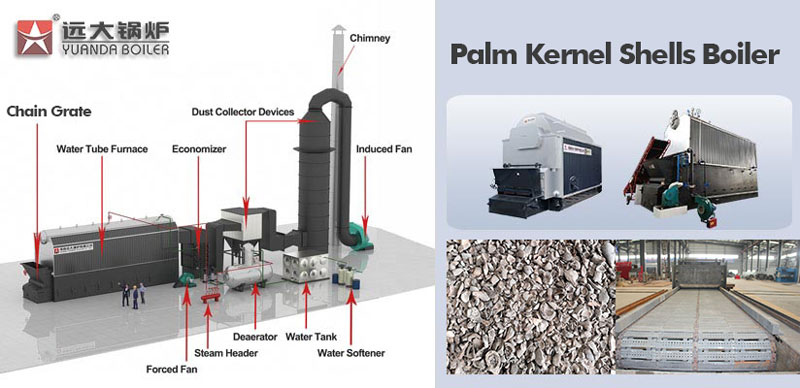
4️⃣ Can EFB Fibre Be Used as Boiler Fuel?
YES — but with conditions
🔥 Fuel Options from EFB
Option A: Whole EFB (Shredded)
Moisture too high
Poor combustion
High auxiliary fuel needed
❌ Not recommended directly
Option B: Pressed / Shredded EFB Fibre (Recommended)
After:
Shredding
Mechanical pressing (dewatering)
New Mass Balance (from 1,000 kg EFB):
Pressed EFB Fibre
│
├── Moisture                  → 45 – 50%
├── Fibre (fuel)              → 280 – 320 kg
└── Press water               → 300 – 350 kg
5️⃣ Boiler Fuel Energy Contribution
🔥 Calorific Value (Pressed EFB)
10 – 12 MJ/kg (wet pressed fibre)
🔢 Energy Potential
300 kg × 11 MJ/kg ≈ 3,300 MJ
Equivalent to:
~90 kg fibre + shell mix
~80–90 kg coal equivalent (rough)
6️⃣ Comparison: EFB vs Fibre vs Shell
| Fuel | Moisture | CV (MJ/kg) | Boiler Suitability |
|---|---|---|---|
| Pressed EFB | 45–50% | 10–12 | Medium |
| Mesocarp Fibre | 35–40% | 13–15 | Very good |
| Shell | 12–15% | 18–20 | Excellent |
👉 Shell is still king, but EFB can replace 10–25% of fuel if handled well.
7️⃣ Typical Power Plant Strategy (Smart Mills)
Use shell + fibre as primary fuel
Add pressed EFB fibre when:
High crop
Low shell availability
Avoid raw EFB feeding directly
8️⃣ Practical Engineering Limits
⚠️ Problems when overusing EFB:
Slagging & fouling
High flue gas moisture
Lower boiler efficiency
Conveyor & feeder blockages
Recommended EFB ratio:
≤ 20–25% of total boiler fuel (by energy)
9️⃣ Financial Perspective (Very Important)
| Item | Value |
|---|---|
| Oil recovered | Low revenue |
| Fuel saving | High impact |
| Steam cost reduction | Significant |
| Payback | From fuel offset, not oil |
👉 EFB = energy asset, not oil source.
🔑 Engineer’s Rule of Thumb
Recover oil only if system already exists
Always dewater before combustion
Control fuel mix, not just tonnage
Below is a practical BOILER HEAT & STEAM BALANCE using EFB (engineer-friendly, numbers you can actually use in the mill).
Basis is pressed EFB fibre (not raw EFB).
🔥 Boiler Heat & Steam Balance Using EFB

1️⃣ Design Basis (Clear Assumptions)
Fuel: Pressed EFB fibre
Fuel flow: 1,000 kg/h (wet)
Moisture: 45%
GCV (as fired): 11 MJ/kg
Boiler efficiency: 70% (realistic for biomass)
Steam condition: 20 bar(g), saturated
Feedwater temp: 105 °C
2️⃣ Heat Input from EFB
Fuel heat input
= 1,000 kg/h × 11 MJ/kg
= 11,000 MJ/h
3️⃣ Useful Heat to Steam (Boiler Efficiency)
Useful heat = 11,000 × 0.70
            = 7,700 MJ/h
Losses (~30%) include:
Flue gas loss
Moisture evaporation (EFB!)
Radiation & unburnt carbon
4️⃣ Heat Required to Produce Steam
Enthalpy values (typical):
Saturated steam @ 20 bar ≈ 2,850 kJ/kg
Feedwater @ 105 °C ≈ 440 kJ/kg
Heat per kg steam
= 2,850 − 440
= 2,410 kJ/kg
5️⃣ Steam Generation from EFB
Steam flow
= 7,700,000 kJ/h ÷ 2,410 kJ/kg
≈ 3,190 kg/h steam
✅ Rule of Thumb:
1 ton pressed EFB ≈ 3.1–3.3 ton steam
6️⃣ Full Heat & Steam Balance (Visual)
Pressed EFB Fibre
(1,000 kg/h, 11,000 MJ/h)
          │
          ▼
      BOILER
   (70% efficiency)
          │
 ┌────────┴────────┐
 │                 │
 ▼                 ▼
Steam Output   Heat Loss
3,190 kg/h     3,300 MJ/h
(7,700 MJ/h)
7️⃣ Where the Heat REALLY Goes (Typical Split)
| Item | % of Input |
|---|---|
| Steam generation | ~70% |
| Moisture evaporation | 15–18% |
| Flue gas loss | 8–10% |
| Radiation & others | 2–4% |
👉 Moisture is the biggest enemy of EFB firing.
8️⃣ Comparison with Fibre & Shell
| Fuel | GCV (MJ/kg) | Steam (kg/ton fuel) |
|---|---|---|
| Pressed EFB | 11 | 3,100–3,300 |
| Mesocarp fibre | 14 | 4,000–4,300 |
| Shell | 19 | 5,500–6,000 |
👉 This is why EFB should be support fuel, not main fuel.
9️⃣ Boiler Operating Limits with EFB
⚠️ Practical limits:
Max 20–25% heat input from EFB
Excess air must be increased
Grate temperature monitored closely
Soot blowing frequency increased
🔧 Engineer’s Operating Tips
Always mix EFB with fibre/shell
Target EFB moisture <50%
Avoid night-only EFB firing (unstable load)
Monitor:
Flue gas temp
O₂ %
Furnace pressure
10️⃣ Quick Mill-Level Example (Reality)
Mill capacity: 60 TPH FFB
Steam demand: ~18 ton/h
EFB available: ~13–14 TPH
Using EFB at 15% boiler heat:
EFB used ≈ 2.5–3.0 TPH
Steam contribution ≈ 8–9 ton/h
Shell saving ≈ 25–30%
💰 That’s real fuel cost reduction.
🔑 Final Takeaway
EFB does not replace shell
EFB reduces fuel cost
Drying & control decide success

No comments:
Post a Comment